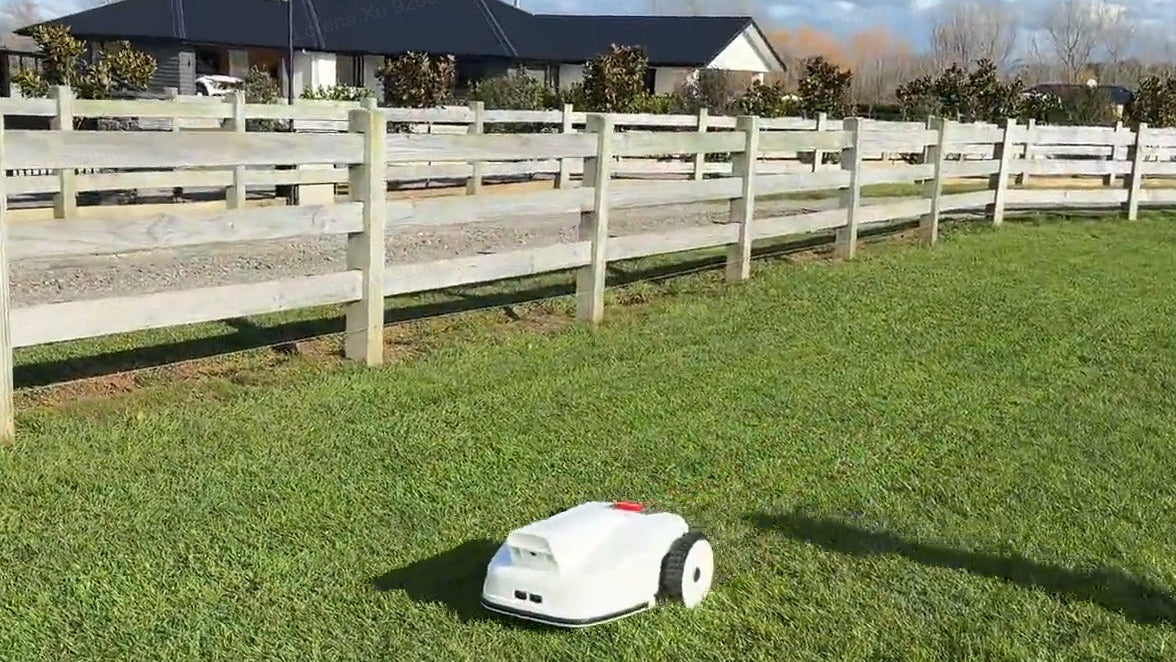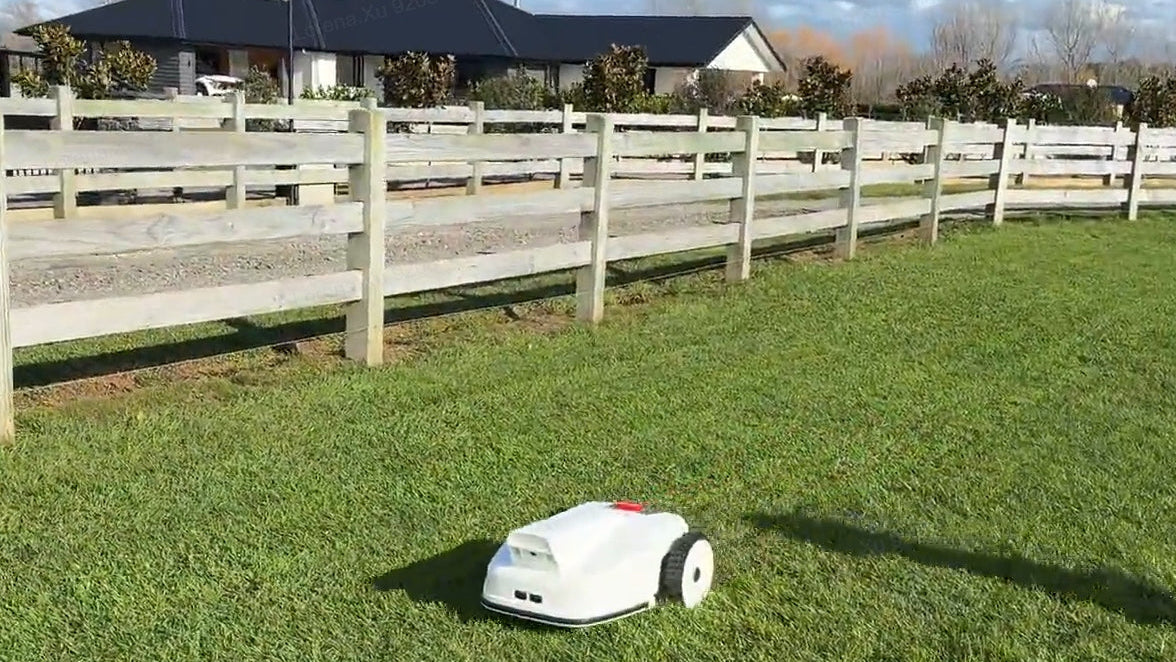





As robotic lawn mower technology becomes more advanced and widely adopted, homeowners are no longer just asking whether a robot mower can cut grass well. Practical questions about real-world yard layouts are becoming increasingly important. One of the most common concerns is simple but critical: can a robot mower cross a driveway?
For many residential properties, the lawn is divided into front and backyard areas separated by a concrete, asphalt, or paved driveway. Traditional mowing equipment requires manual effort to move between these zones, but an automated lawn mower robot promises hands-free operation. Whether that promise holds true depends on how the robotic lawn mower navigates, maps, and understands its environment.
This article explores in detail how modern robot lawn mowers cross driveways, what technologies make it possible, and how to choose the right model if your yard layout includes paved surfaces.
How a Robotic Lawn Mower Navigates a Yard
A robotic lawn mower typically navigates using a combination of positioning systems, environmental sensing, and intelligent software. Early robot yard mower designs relied on random movement patterns and physical boundary wires, which limited their flexibility. Modern autonomous robot mower systems are far more precise and adaptable.
Today’s robotic lawn mowers generally use one or more of the following navigation approaches:
- RTK-based positioning for high-precision path control
- Lidar robot mower scanning for real-time environment mapping
- Vision-assisted and sensor-fusion systems for obstacle detection and surface recognition
These navigation systems allow a robotic lawn mower to understand where it is, where it should mow, and where it should simply pass through—such as when crossing a driveway.
Can a Robotic Lawn Mower Cross a Driveway?
Yes, many modern robotic lawn mowers can cross a driveway safely and reliably. However, this capability depends on several factors, including navigation technology, surface type, and proper setup.
A robot lawn mower can cross a driveway when it is able to:
- Recognize the driveway as a non-mowing surface
- Disable cutting while crossing
- Maintain traction and stability
- Navigate accurately between multiple lawn zones
Advanced wire free robot lawn mower models are specifically designed to handle these scenarios without manual intervention.
Driveway Surface Types and Robot Lawn Mower Performance
Not all driveways are created equal, and surface material plays an important role in how well a robotic lawn mower performs.
Concrete and Asphalt Driveways
Concrete and asphalt are the easiest surfaces for a robotic lawn mower to cross. Most electric robot lawn mower designs can drive smoothly over these materials without losing traction or navigation accuracy.
Wireless robot mower systems using RTK or lidar can clearly identify these surfaces and treat them as transition paths rather than mowing zones.
Gravel Driveways
Gravel driveways are more challenging, especially for small lawn mower robot designs. Loose stones can reduce traction and affect wheel stability. Larger, heavier all terrain robot lawn mower models perform better in these conditions.
Some robot lawn mower for rough terrain designs include reinforced wheels and enhanced suspension to improve performance on gravel.
Brick and Paver Driveways
Brick and paver surfaces usually work well for robot lawn mowers, provided the gaps between stones are not too deep. A robot lawn mower uneven ground design is better suited for these surfaces, especially when combined with lidar-based navigation.
Boundary Wire Systems vs Wire-Free Robotic Lawn Mowers
Whether a robot lawn mower can cross a driveway often depends on whether it uses boundary wires.
Boundary Wire Robot Lawn Mowers
Traditional guide wire robot lawn mower systems rely on physical cables installed around the lawn. To cross a driveway, the wire must be carefully laid across or beneath the paved surface. While this method works, it increases installation complexity and reduces flexibility.
Wire-Free and Virtual Boundary Systems
A robot lawn mower without perimeter wire offers much greater freedom. These models use GPS lawn mower robot positioning, lidar scanning, or sensor fusion to create virtual boundaries.
A boundary wire-free robot mower allows users to define safe crossing paths digitally, making it easier for the mower to travel between front and backyard areas without physical wires. This is why perimeter wire free robot lawn mower designs are increasingly popular among modern homeowners.
RTK Robot Mower Technology and Driveway Crossing
RTK robot mower systems use high-precision satellite positioning to achieve centimeter-level accuracy. This precision allows the robotic lawn mower to follow exact paths across different surfaces.
For properties with large lawns or multiple zones, RTK navigation ensures the mower can cross a driveway along a predefined route without drifting into unwanted areas. This makes RTK-based robotic lawn mowers ideal for robot mower for 2 acres, robot lawn mower for 1 acre, and other large property applications.
Lidar Robot Mower Navigation for Complex Layouts
A lidar robot mower uses laser scanning technology to continuously map its surroundings. This approach allows the mower to detect obstacles, boundaries, and surface changes in real time.
When crossing a driveway, lidar-based systems can accurately recognize the transition from grass to pavement and back again. This capability is especially useful for robotic lawn mower for large lawns and properties with uneven terrain or complex layouts.
Multiple Zones and Driveway Transitions
For lawns divided by a driveway, multi-zone support is essential. A robot mower multiple zones feature allows the mower to treat separate lawn areas as independent mowing zones while using the driveway only as a connection path.
Many programmable robot lawn mower models allow users to define these zones through an app control robot mower interface. This ensures efficient mowing coverage without unnecessary repetition or missed areas.
Obstacle Avoidance and Safety Near Driveways
Driveways are high-traffic areas where safety matters. A robot mower with obstacle avoidance technology is essential for preventing collisions with vehicles, people, or pets.
- Real-time obstacle detection
- Automatic blade disengagement
- Anti-theft robot mower tracking
- Emergency stop mechanisms
These features make robotic lawn mowers suitable for both residential robot lawn mower and professional robotic lawn mower use.
Slopes, Curbs, and Elevation Changes
Many driveways include curbs or elevation changes that can challenge a robot lawn mower. A robot lawn mower for hills or robot lawn mower for steep hills is designed to handle slopes, but steep curbs may still require adjustments.
Solutions include smoothing transitions, installing small ramps, or adjusting virtual paths in the mower’s mapping system. An all terrain robot lawn mower is generally better equipped for these conditions.
Charging Stations and Driveway Layouts
A robot lawn mower with charging station placement can affect how often the mower crosses a driveway. Some users install the charging station in a central location to minimize travel distance.
A robot lawn mower self charging system ensures the mower automatically returns to its base when the battery is low, even if it needs to cross a driveway to do so.
Commercial and Large-Area Applications
For commercial robotic lawn mower users and acreage robot mower applications, driveway crossing is a common requirement. These professional-grade models are built to handle large areas, multiple zones, and frequent surface transitions.
Features often include extended battery life, precise navigation, and robust construction for consistent performance across large properties.
Is a Robot Lawn Mower Right for Your Property?
- Lawn size and number of zones
- Driveway surface and slope
- Preference for wire-free operation
- Desired level of automation and control
Browsing a specialized robotic mower store can help you compare models and find the right solution for your needs.
Buying a Robotic Lawn Mower That Can Cross a Driveway
When looking for a robot lawn mower for sale, prioritize models with advanced navigation, reliable obstacle avoidance, and multi-zone support. These features ensure smooth operation across driveways and other non-grass surfaces.
Conclusion: Can a Robot Mower Cross a Driveway?
Yes, a robot mower can cross a driveway when equipped with modern navigation technology such as RTK positioning or lidar scanning. With proper setup and the right model, crossing paved surfaces is safe, reliable, and increasingly common.
For homeowners looking to reduce manual labor and maintain a consistently neat lawn, a robotic lawn mower offers a smart, long-term solution—especially when designed to handle real-world yard layouts that include driveways.